
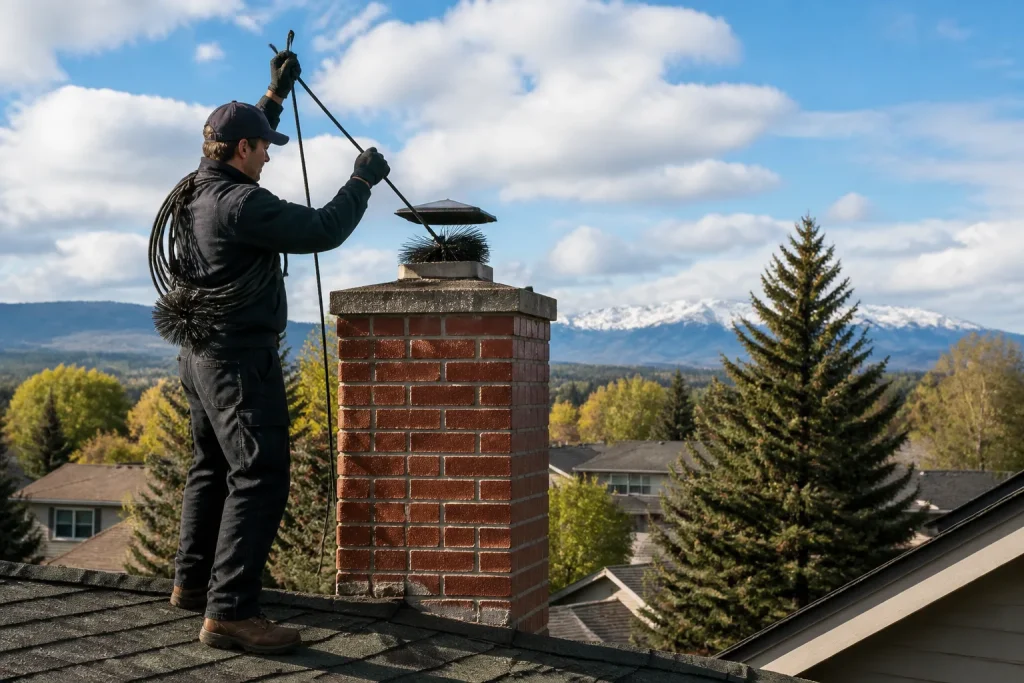
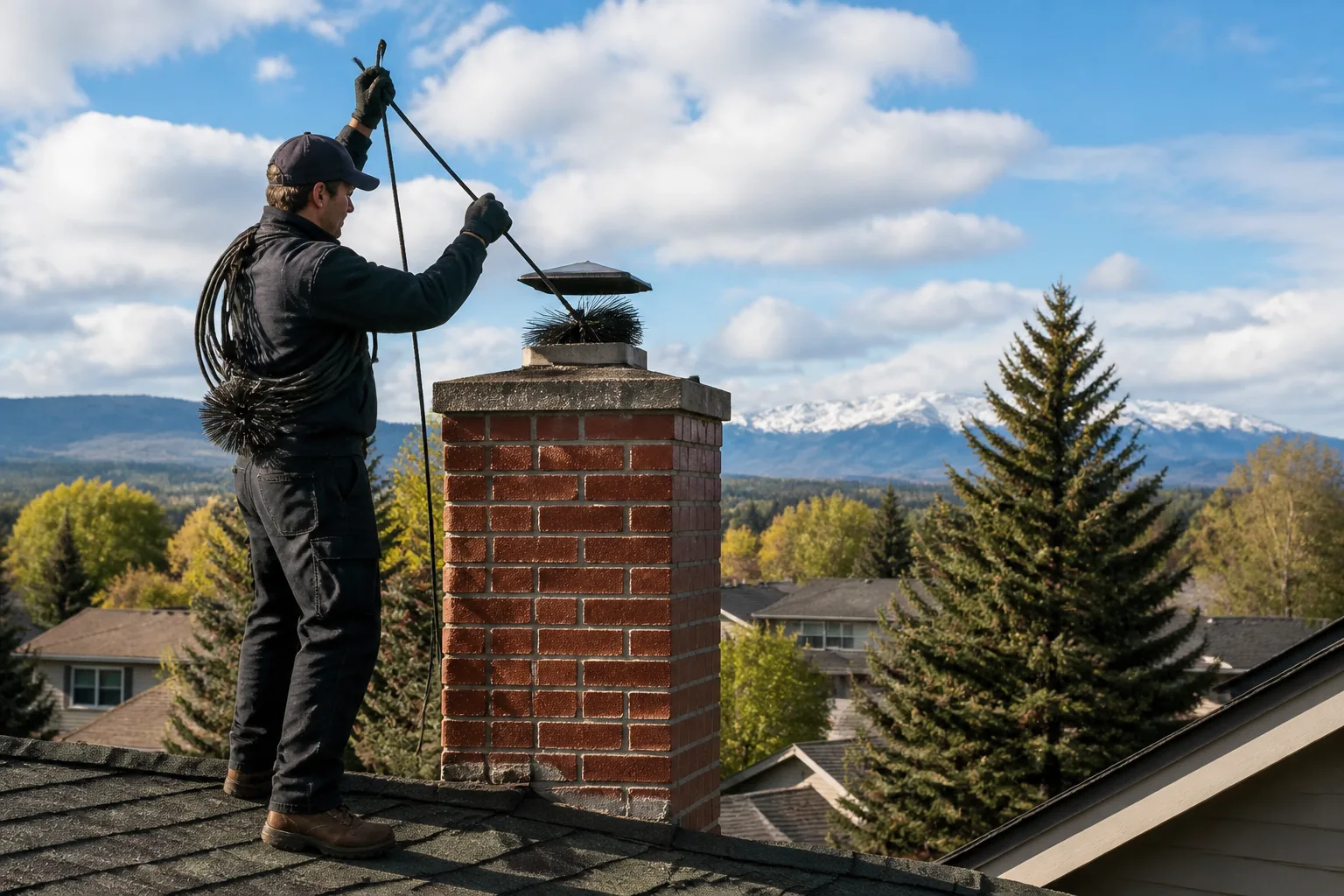
Emergency Chimney Sweep Near Me: What Lakewood Homeowners Should Do First
If you’ve heard a low roar inside the chimney, or smoke suddenly rolling back into the room, calling a sweep is not your first move. The first move is deciding which emergency you actually have. A chimney fire that’s actively burning needs 911. Smoke with no visible flame needs the fire damped and the house ventilated, then a call. A strong odor with nothing else needs an inspection before the next burn. Getting that order right in the first fifteen minutes is the whole game, and it’s the part most Lakewood homeowners get backwards. If you’d rather have someone walk you through it, call (855) 964-4542. We answer 24/7.
What counts as a chimney emergency in Lakewood?
A chimney emergency in Lakewood is any condition where fire, smoke, or combustion gas is moving somewhere it shouldn’t. Three situations cover nearly every call we take, and they’re not the same problem.
- Active chimney fire. A low roar or a sound like a freight train in the walls, popping and cracking from the flue, thick smoke or a visible glow at the chimney top, or flames and sparks coming out the cap. This is a fire, not a maintenance issue. Call 911 first.
- Smoke rollback with no visible flame. The firebox lights but the smoke won’t go up. It spills into the room, stains the wall above the opening, and sets off alarms. Usually a blocked or restricted flue, a closed or partly closed damper, or a cold flue that hasn’t drafted yet.
- Strong odor without smoke. A sharp, acrid, or campfire smell through the house, worse on cool mornings when the pressure outside changes. Sometimes a draft reversal. Often a sign of creosote or debris sitting in the flue with nowhere to go.
Our technicians have up to 9 years of experience, and the pattern holds: the calls that turn out to be serious are the ones where the homeowner kept burning because nothing visible was wrong. The calls that turn out to be simple are the ones where someone stopped, looked, and described what they saw clearly.
What should you do in the first 15 minutes of a chimney fire?
In the first 15 minutes of a suspected chimney fire, get everyone out, call 911, then close the firebox doors and shut the air supply if you can do it safely. Calling a sweep is step three, not step one. A chimney sweep cannot put out a fire, and the fire department can.
Here’s the sequence in order:
- Get people out of the house. People first, pets second, belongings don’t enter the conversation.
- Call 911 from outside. Say “chimney fire” plainly. Give your Lakewood address and say whether you see smoke or flame at the top of the chimney.
- If you’re already back inside or never left, close the firebox doors and shut the air intake. The fire needs oxygen, and the firebox is where it’s getting it. Do this only if it’s a few steps away and the room is clear enough to see. Never open the doors to check on it.
- Don’t throw water into the firebox. Water on a hot flue can crack tile liners or a masonry chimney outright, and it will send a cloud of steam and soot into the room.
- Don’t spray anything into the flue from the top or the bottom. No chimney fire extinguishers you saw online, no powders, nothing. Let the fire department decide.
- Stay out until the fire department clears the structure. A chimney fire can travel into the wall framing and keep burning quietly after the flue looks quiet.
The mistake we hear about most is homeowners who shut the damper and go back to watching television because the roaring stopped. A fire that goes quiet is not a fire that’s out. It’s a fire that’s moved into something you can’t see.
Smoke rolling into the room with no flame: what now?
Smoke rollback with no visible flame means the flue isn’t drafting. Close the damper to stop the spill, open a window or exterior door in the same room to equalize pressure, and get the fire out if you safely can.
The step homeowners skip is equalizing the pressure. A house running a strong bathroom fan, kitchen exhaust, or dryer pulls air backward down the flue. Open a window a crack near the fireplace and the draft often reverses within a minute. That’s not a fix, but it tells you the problem is pressure rather than a total blockage, and that helps when you call.
Then get the flue looked at before you light another fire. Smoke where it shouldn’t be is your chimney telling you the flue is restricted, cracked, or cold. A chimney sweep with a camera inspection will tell you which. We inspect before we recommend, and the camera tells you whether you’re looking at a sweep, a liner issue, or a structural problem. That’s how a Lakewood homeowner can be sure the recommendation matches the evidence.
Rollback in cool, dry Lakewood weather is also common in the fall when the flue is cold and the house is sealed tight. If it happens once on the first fire of the season, get it looked at. If it happens every fire, stop burning until someone has seen it.
Why Lakewood’s fall conditions raise the stakes on creosote
Lakewood’s dry fall air and swinging day-to-night temperatures make early-season fires the highest-risk ones of the year, because the creosote sitting in the flue from last winter is at its most combustible right when homeowners start burning.
Creosote builds in stages. The soft, flaky kind is easy to brush out. The glazed, tar-like kind is harder, sits tight to the liner, and ignites at much lower temperatures. In a dry climate, that deposit dries out further through the summer and early fall, and a dry deposit is a more willing fuel than a damp one. Add a first cold snap, a homeowner who loads the firebox heavy to warm the house, and a restricted flue, and you have the exact conditions that light a deposit nobody knew was there.
The practical answer is to book a sweep before the first real burn, not after. That gives you a clean flue going into the season and a good look at the liner while it’s still easy to fix. Our service covers the whole chimney system, not just the flue, so a single visit tells you the state of the cap, crown, firebox, and damper at the same time. If the liner is worn but not failing, HeatShield resurfacing can restore it without a full reline, which is a cost-saving option most sweep-only outfits simply can’t offer. If a reline is the right call, we work with DuraFlex and Olympia Chimney systems. Either way, you’re deciding based on what the camera shows.
How to describe a chimney emergency so you get the right help faster
Describe a chimney emergency by answering five questions: what you see, what you hear, what you smell, when it started, and whether the fire is still burning. A sweep can triage from those answers and tell you whether a same-day visit is warranted or whether a full stop is the safer move.
- What you see. Smoke inside the room, a haze at the chimney top, stains above the fireplace opening, or nothing visible at all.
- What you hear. A roar, a rumble, popping, or nothing. “It sounds like a train in the wall” is a useful description and a sweep will understand exactly what you mean.
- What you smell. Sharp and acrid, smoky, or a campfire smell drifting through the house hours after a fire.
- When it started. During a fire, right after lighting, or first thing in the morning when the heating system comes on.
- Whether the fire is out. Fully out, still burning, or you’re not sure. “Not sure” is a fine answer, and it changes the recommendation.
A sweep who hears “smoke coming out of the fireplace with no flame” can usually tell you what to do on the call. A sweep who hears “roaring sound, my alarm is going off, fire department on the way” will tell you to stay on the 911 call and to book the inspection after the fire department clears the house. Being able to say which situation you’re in is what makes the call short and useful.
Two habits make a real difference before you dial. Note your address clearly and don’t bury it in the story. And if you’re on the fence, say so out loud: a sweep can ask the right follow-ups. We answer 24/7, so the phone is not the bottleneck. Getting the description right is.
What to document after a chimney incident (and why it matters)
Document a chimney incident within the first 24 hours: take photos and video before anything is cleaned or moved, save receipts for any emergency call-out or hotel stay, and get the fire department’s incident report number. Most homeowners wait until the insurance claim is underway, and by then the evidence is gone.
- Photograph everything before cleanup. The firebox, the wall above the fireplace opening, the chimney exterior at the roofline, the cap, and the inside of the room. Cleanup removes evidence an adjuster will ask for.
- Record a short video. Walk the room, narrate the damage, and include the date. Time stamps are useful.
- Keep the fire department paperwork. Their report is a factual record of what they found, and it usually carries more weight than anything you can describe after the fact.
- Keep every receipt. Emergency lodging, food while displaced, cleanup supplies, and any temporary repairs.
- Get a professional inspection in writing. A documented inspection after the incident, with photos, supports the claim and also tells you what’s safe to use again.
One insurance adjuster will not want your description of “some smoke damage.” They’ll want the inspection report, the before photos, and the fire department’s account. Getting those in place early is the difference between a clean claim and a long argument.
After a fire, the chimney is rarely the only thing that needs attention. The flue liner, the crown at the top, and the firebox are all in the path of the heat, and a proper inspection after an incident should look at all three. We handle that full range, including chimney cap & crown work where the top of the system took the hit, and fireplace repair where the firebox or damper was damaged. One call covers it, from inspection through repair.
When should you call a pro instead of handling it yourself?
Call a pro for any incident that involved visible flame, a roaring sound, or smoke inside the living space. Those are the three conditions where a flue liner can be damaged in ways only a camera will show.
Even a small chimney fire can crack a clay tile liner, open a joint, and leave a path for carbon monoxide to leave the flue and enter the house. Smoke rollback that keeps happening points to a restriction or a draft problem. And a strong odor without smoke is often the first sign of a blocked or partially blocked flue, which is the condition that leads to a carbon monoxide call. We’d rather talk to you before you light another fire than after a detector goes off.
Here’s the honest part, and it’s the reason we’re not selling something on every call: many of these situations can safely wait for a scheduled visit. A cosmetic crack in the crown, a missing cap screw, or a slight draft issue that showed up on a mild day does not need same-day attention. If it can wait, we’ll tell you it can wait. Safety is the reason to act on a real problem, not a reason to sell you work.
The bottom line on a suspected fire: if there’s any doubt, treat it as real and call 911. A false alarm costs you an evening. The alternative costs much more.
The Bottom Line
An emergency chimney sweep in Lakewood isn’t a phone number you call first, it’s the person you call third. 911 handles a fire that’s burning. Ventilation and pressure relief handle smoke with no flame. The sweep handles what comes next: the inspection that shows you what’s actually wrong, and the repair work to fix it before the next fire.
Key takeaways:
- A low roar inside the walls is a chimney fire. 911 first, sweep second.
- Smoke with no flame: close the damper, open a window, then call.
- Strong odor with no smoke: get the flue inspected before you burn again.
- Document immediately after any incident, not after the claim starts.
- Book a sweep before the first burn of the season, not after the first scare.
If you’re in Lakewood and need help, Lakewood Chimney Sweep Experts offers free estimates. Call (855) 964-4542. We answer 24/7. Fast dispatch from 7am to 7pm, Sunday through Friday. The local pro we connect you with is licensed and insured as the state requires. Our technicians have up to 9 years of experience, and we inspect before we recommend. Lakewood Chimney Sweep Experts handles inspection, sweep, and repair under one call, so you’re not chasing a second contractor after the first one finds a problem.
Frequently Asked Questions
Yes, get an inspection before the next fire. A smoky smell with no visible smoke usually means the flue is restricted or the draft has reversed, and either condition gets worse with use. It’s not always urgent, but it does need a camera inspection before you light another fire. Call (855) 964-4542 for an exact quote. Estimates are free.
A chimney fire typically sounds like a low roar or a rumbling in the walls, sometimes with popping or cracking, and often shows thick smoke or a visible glow at the chimney top. Some burn quietly and give almost no warning, which is why an inspection matters more than any sound. If you have any of those signs, call 911 before anything else.
No, not after a suspected fire. A chimney fire can travel into the wall framing and keep burning after the flue sounds quiet, and a cracked liner can leak carbon monoxide into the house. Get the fire department to clear the structure first, then book the inspection. Call (855) 964-4542 once you’ve been cleared.
Dry fall air lets creosote deposits dry out further, and dry creosote ignites far more easily than damp. Combined with a cold flue and a heavy first fire, that’s the highest-risk moment of the year. A pre-season sweep clears the deposit before it has a chance to burn. Call (855) 964-4542 to schedule one. Estimates are free.
Written by the team at Lakewood Chimney Sweep Experts.
Need Chimney Cleaning Help?
Call Lakewood Chimney Sweep Experts - the local pro we connect you with is licensed and insured, here with fast help in Lakewood.
(855) 964-4542