
Last updated November 23, 2026
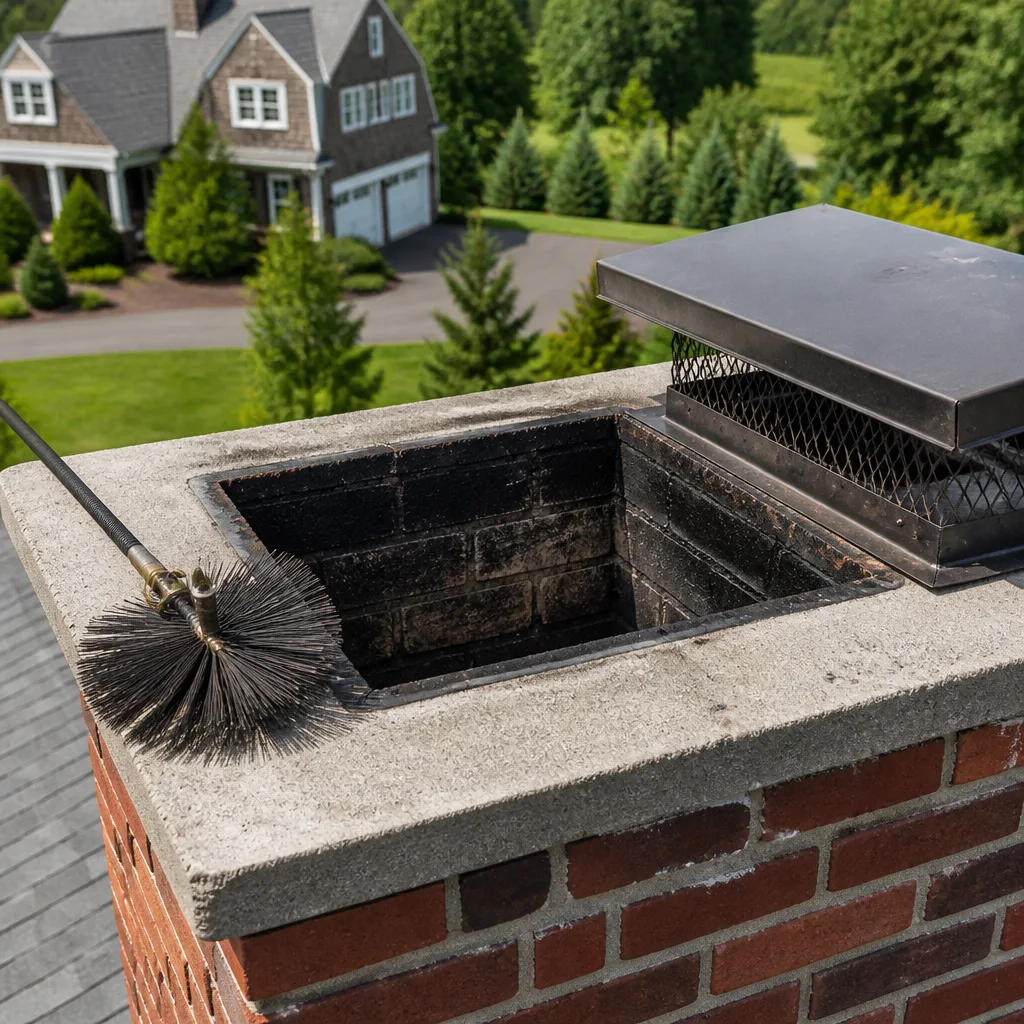 Sweep & inspection
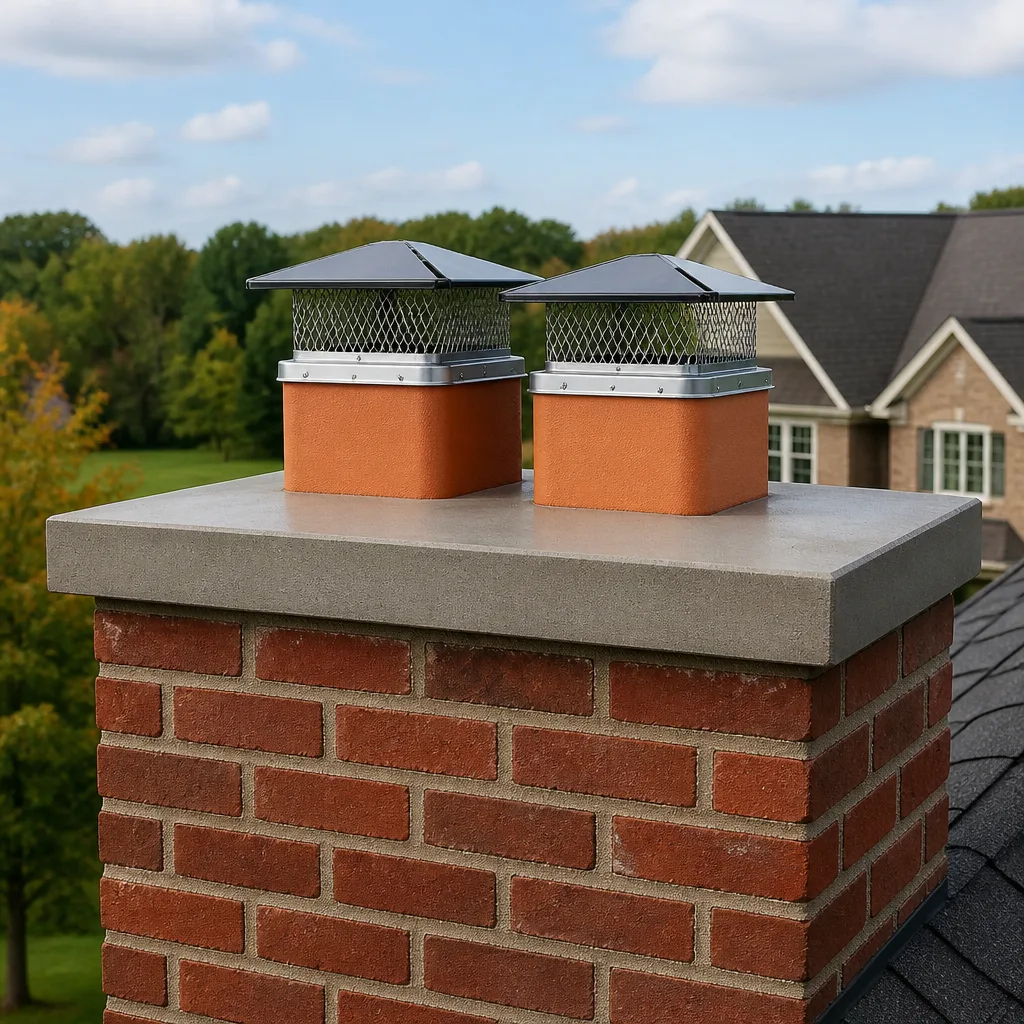 Caps & crowns
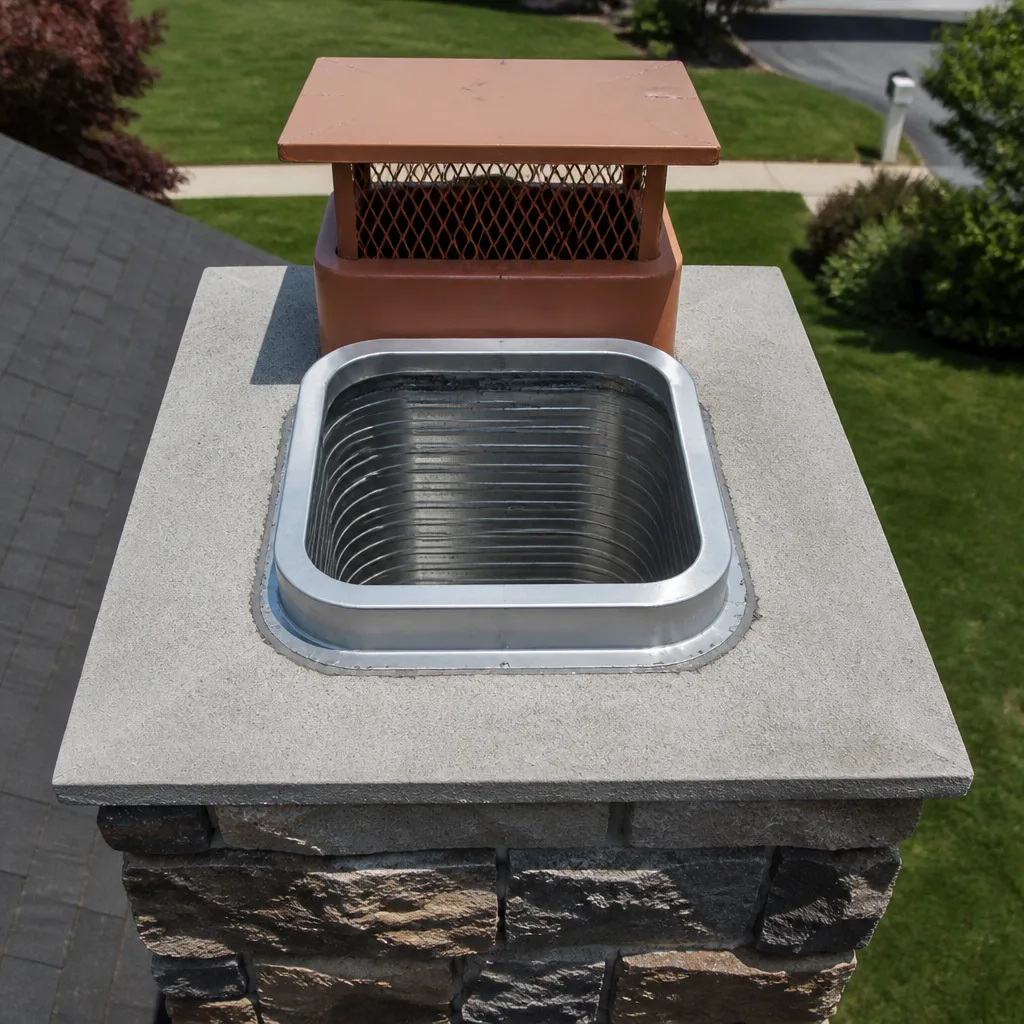 Flue relining
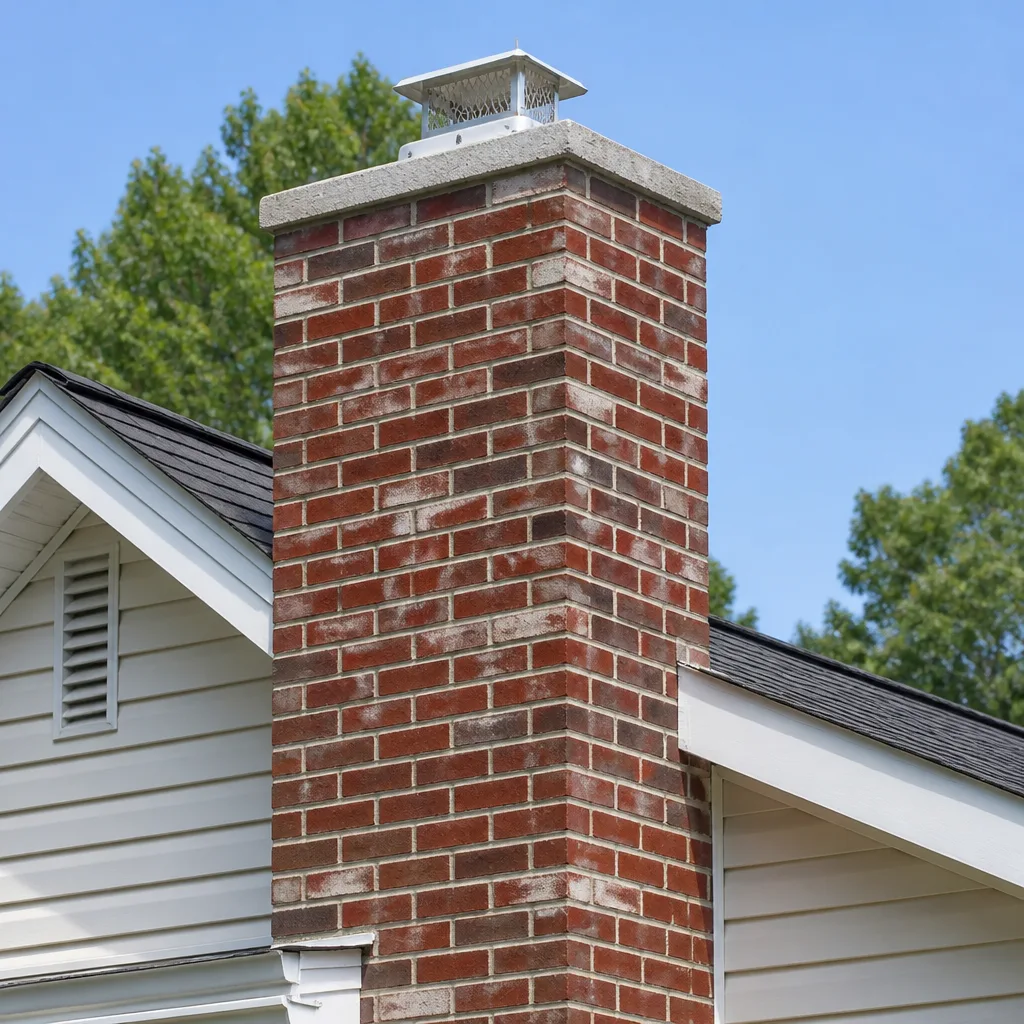 Masonry repair
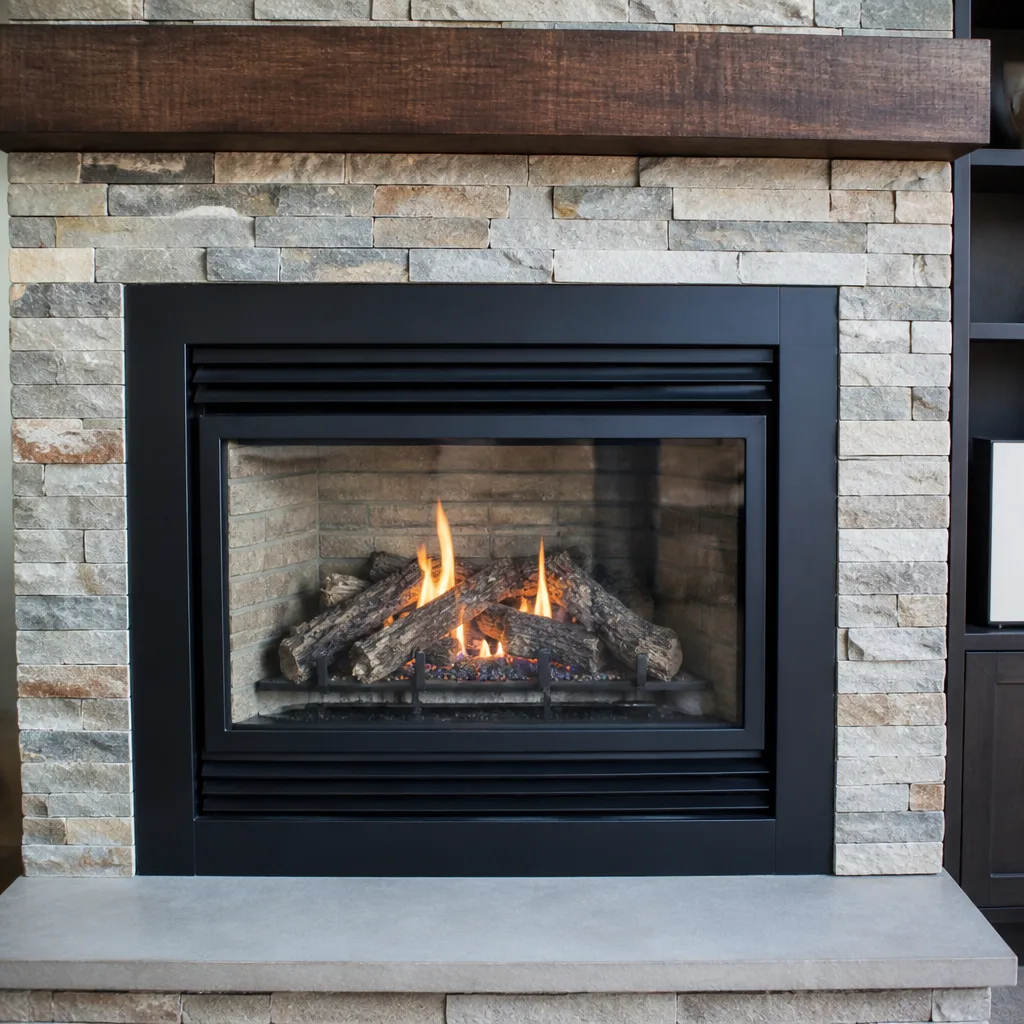 Gas fireplace service
Level 1 sweep and inspection to the NFPA 211 annual standard - flue, crown, cap, and flashing checked and photographed
Chimney sweep logs do not sweep chimneys. They loosen some creosote - which then falls where a brush and vacuum still have to collect it.
Chimney Cleaning Warning Signs: A Lakewood Homeowner’s Reference Guide
A white haze on your firebox back wall isn’t aesthetic. It’s efflorescence, a mineral bloom that only forms when water is moving through masonry that should be dry, and it usually shows up months before a homeowner notices anything actually “wrong.” That’s the pattern with most chimney problems: the early signals are quiet, easy to file away as normal fireplace behavior, and gone by the time the loud symptoms arrive. This guide walks through the subtle warning signs Lakewood homeowners dismiss, what each one means at the flue and masonry level, and how early recognition keeps a cleaning call from turning into a repair bill.
Quick Answer
Chimney cleaning warning signs in Lakewood include creosote odor that strengthens on warm days, sluggish ignition or smoke that puffs back before drawing, white staining or flaking on firebox masonry, and exterior mortar or crown damage from freeze-thaw cycling. A clean-looking firebox does not mean a clean flue; glazed creosote often sits in the upper flue where nobody looks. When several of these signals appear together, book an inspection.
Styles & brands we work with
- Sweep & inspection
- Caps & crowns
- Flue relining
- Masonry repair
- Gas fireplace service
Table of Contents
- What Do the Different Chimney Smells Actually Mean?
- Why Have Draft Changes Become a Warning Sign?
- What Visual Signals Inside the Firebox Should You Read?
- Which Exterior Warning Signs Are Specific to Lakewood Homes?
- Why Can a Clean-Looking Firebox Still Hide Stage 2 Creosote?
- How Do the Three Stages of Creosote Progress?
- How Often Should a Lakewood Chimney Be Swept?
- What Seasonal Rhythm Should You Follow Before Burning Season?
What Do the Different Chimney Smells Actually Mean?
Not every fireplace smell is creosote. In our experience, homeowners tend to lump three very different odor profiles together, and the distinction tells you a lot about what’s happening inside the system. A cold, sooty smell that strengthens on mild days is classic creosote buildup reacting to humidity. A sharp, sour, ammonia-tinged odor usually points to animal intrusion, often a bird or squirrel that found the flue through an uncapped chimney. A musty, damp, earthy smell is a moisture signal, typically mortar that has soaked up water and is breaking down from the inside.
Smell tells you which problem you have, but not how serious it is. That’s why we inspect before we recommend anything. Here’s how the profiles break down:
- Creosote odor. Strengthens as temperatures rise or when the firebox has been unused for a stretch. It means deposits are present, but not how much or where.
- Animal odor. Sharp and sour, sometimes with scratching at the damper. Combustion byproducts from a nest can also reduce draft and create a fire hazard.
- Moisture odor. Damp and musty after rainfall or snowmelt. Points toward masonry or mortar that’s taking on water through a cracked crown, failed flashing, or unsealed joints.
- Smoke smell in the house. Not an odor so much as a draft problem, and covered in the next section.
The single most common mistake is treating an odor as a nuisance rather than a data point. A smell that lingers for weeks, or returns as soon as the season ends, is telling you something has changed in the flue. It’s worth having Lakewood Chimney Sweep Experts look at it before the next burn.
Why Have Draft Changes Become a Warning Sign?
Draft changes are the warning sign Lakewood homeowners miss most often because they happen slowly, and each individual episode seems trivial. Sluggish ignition, a fire that takes three tries to catch, smoke that puffs back briefly before drawing up the flue, or a fire that seems to “stall” mid-burn all point to the same thing at the flue level: something is restricting or disturbing airflow.
The usual causes are less dramatic than they sound. A mid-season deposit of creosote can narrow the flue enough to slow the column of hot gas. A nest or debris at the top can block the draft cap. A partially closed damper, if nobody has checked it in a while, can do the same thing. And then there’s the subtle one: a flue that’s sized wrong for the firebox, which still works on cold days when the temperature differential is strong but becomes fussy as outdoor temperatures moderate. That’s why draft problems often “improve” in deep winter and return in the shoulder seasons, which convinces homeowners the issue is weather, not the chimney.
Draft is also a safety signal, not just a comfort one. A chimney that’s not drawing properly is a chimney that can push carbon monoxide back into the living space. If you have a carbon monoxide alarm in the home, verify it’s functioning, and if the alarm has ever gone off near a burning fireplace, treat that as your warning to stop burning until the system is inspected. Our technicians have up to 9 years of experience reading these signals, and the pattern is consistent: a sluggish draft that gets worse over a season rarely resolves on its own.
What Visual Signals Inside the Firebox Should You Read?
You don’t have to be a chimney specialist to read the firebox. There are five visual signals any homeowner can look for with a flashlight and a few minutes, and each one points at a specific category of issue.
- White, powdery staining on the back wall or side brick. This is efflorescence, and it means water is migrating through the masonry. It’s a moisture problem, not a fire problem, and it usually precedes a much more visible symptom by months.
- Dark staining patterns. Streaks radiating from the throat or fanning across the firebox panels suggest smoke has been escaping rather than rising cleanly, which ties back to draft.
- Spalling or flaking brick faces. When the front face of the firebox brick flakes off, moisture has gotten behind it and freeze-thaw has done the damage. This is masonry deterioration, and it’s structural.
- Cracked or loose firebrick. Firebrick panels are the heat shield of the firebox. Gaps between them let heat reach the masonry behind.
- Rust or corrosion on the damper or firebox metal parts. Rust inside a firebox means water is present where it shouldn’t be.
A quick flashlight check once a season costs nothing and catches moisture signals before they become masonry repairs. If you find one of these, it’s worth having the firebox inspected properly, and if a repair is needed we handle it as part of our fireplace repair service so you don’t have to coordinate a second contractor.
Which Exterior Warning Signs Are Specific to Lakewood Homes?
Lakewood sits at the foot of the Front Range, where freeze-thaw cycling is one of the defining stresses on exterior masonry. Water gets into a mortar joint or a hairline crack in the crown, freezes overnight, expands, and thaws the next morning. Do that hundreds of times over a winter and joints that were sound in October are crumbling by April. That’s why Lakewood homeowners should look at four exterior signals every spring:
- Mortar joint degradation. Look for joints that are recessed, sandy, or missing chunks between the chimney bricks. This is the most common exterior warning sign we see on Lakewood homes.
- Crown cracking. The concrete cap on top of the chimney is the roof of the whole structure. A crack in it is a direct path for water into the flue.
- Flashing separation. The metal flashing where the chimney meets the roof should be tight against the masonry. Lifted edges or separated seams let water down the side of the chimney and into the house.
- Chimney cap damage or absence. A missing or rusted-out cap lets rain, birds, and debris straight into the flue.
These signals are worth acting on even if you don’t burn a fire. A chimney that’s taking on water gets worse every season, and the difference between re-pointing mortar and rebuilding a chimney is a matter of how early you catch it. That’s the reasoning behind treating chimney cap & crown as its own dedicated service rather than an add-on to a sweep. Protecting the top of the system protects everything below it.
Why Can a Clean-Looking Firebox Still Hide Stage 2 Creosote?
A clean-looking firebox after a season of moderate use can absolutely still have glazed creosote in the upper flue. This is the single most important misconception in the warning-signs conversation, and it causes more homeowners to skip a sweep than any other assumption. The firebox is where the fire burns, but the upper flue is where the smoke condenses. The deposits form highest up, in the cooler part of the flue where the gases slow down and settle, and that’s the part of the system you can’t see from the firebox.
Moderate use makes this worse, not better. A homeowner who burns a dozen fires a season, mostly on cold nights, and uses well-seasoned wood will often see a relatively clean firebox. But if the last few burns before spring are on mild evenings when the flue is slow to warm, the smoke sits longer and deposits build. The only way to know what’s in the upper flue is to put a camera in it. That’s why any honest recommendation starts with evidence, and why we show the photos rather than describing them.
The stages matter because they need different responses. Stage 1 creosote is flaky and brushes off cleanly. Stage 2 is denser and more stubborn. Stage 3 is glazed and hardened, and a sweep alone won’t remove it. If we find Stage 3, resurfacing with chimney sweep follow-up is often the route, and the HeatShield system we use can restore a deteriorating flue liner without full replacement, which is a saving that sweep-only companies can’t offer because they don’t carry the capability. If a full reline is the right call, we install with DuraFlex or Olympia Chimney liner systems that meet industry venting standards.
How Do the Three Stages of Creosote Progress?
Creosote progresses through three stages, and each one requires a different level of intervention. Understanding the progression helps you interpret what a chimney professional finds and why the recommendation changes from cleaning to repair.
- Stage 1: Sooty and flaky. Brushes off during a standard sweep. This is the expected state after a normal season of burning seasoned wood.
- Stage 2: Dense and granular. More stubborn, and it needs more than a light brushing. A camera inspection matters here because the depth of the deposit can be misjudged from below.
- Stage 3: Glazed and hardened. The most dangerous stage. It resembles a hard black lacquer on the flue walls, and it is highly combustible. A standard sweep won’t remove it. Resurfacing or relining is often the route, and it’s the point at which postponing work becomes genuinely unsafe.
The key warning sign at each stage is subtle: it’s not the deposit you can see in the firebox, it’s the deposit you can’t. That’s why we recommend a camera inspection on any chimney that’s been in service for a full season without a look, whether the firebox looks clean or not.
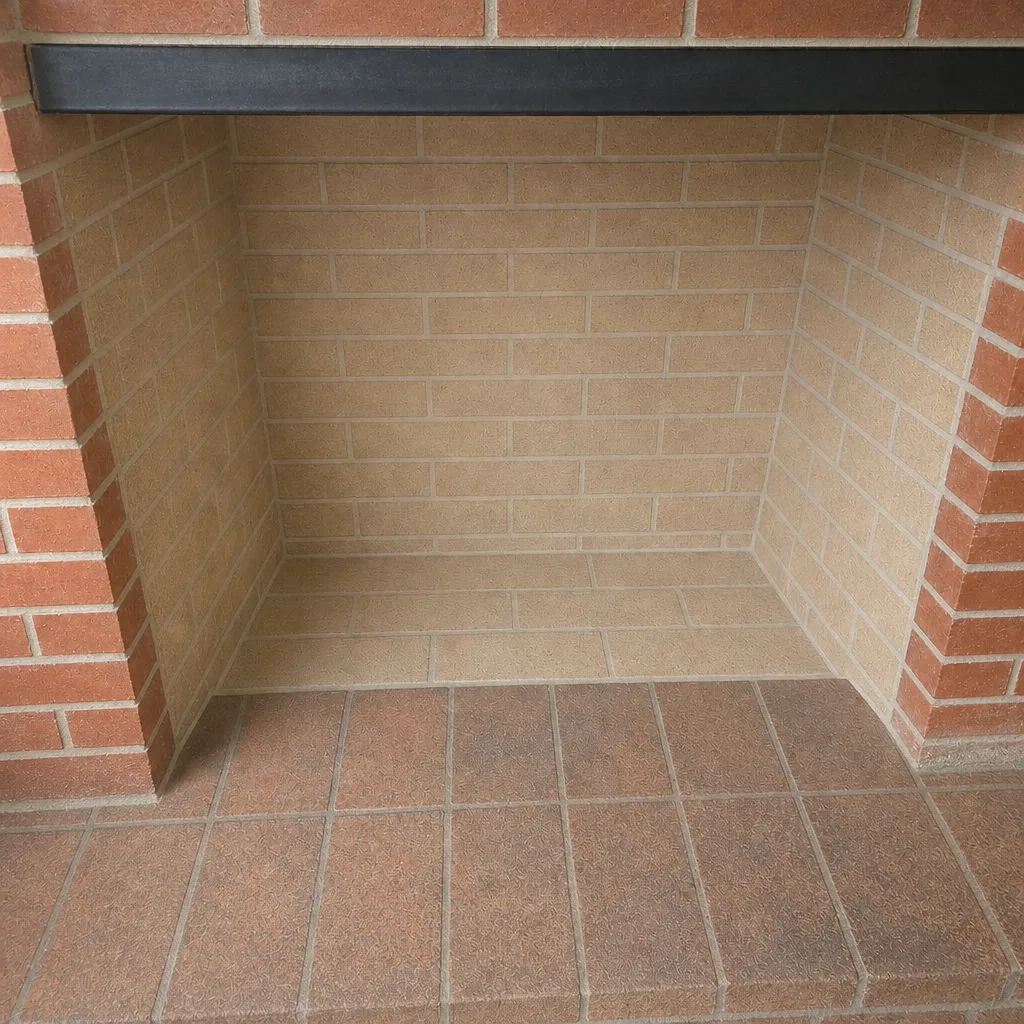
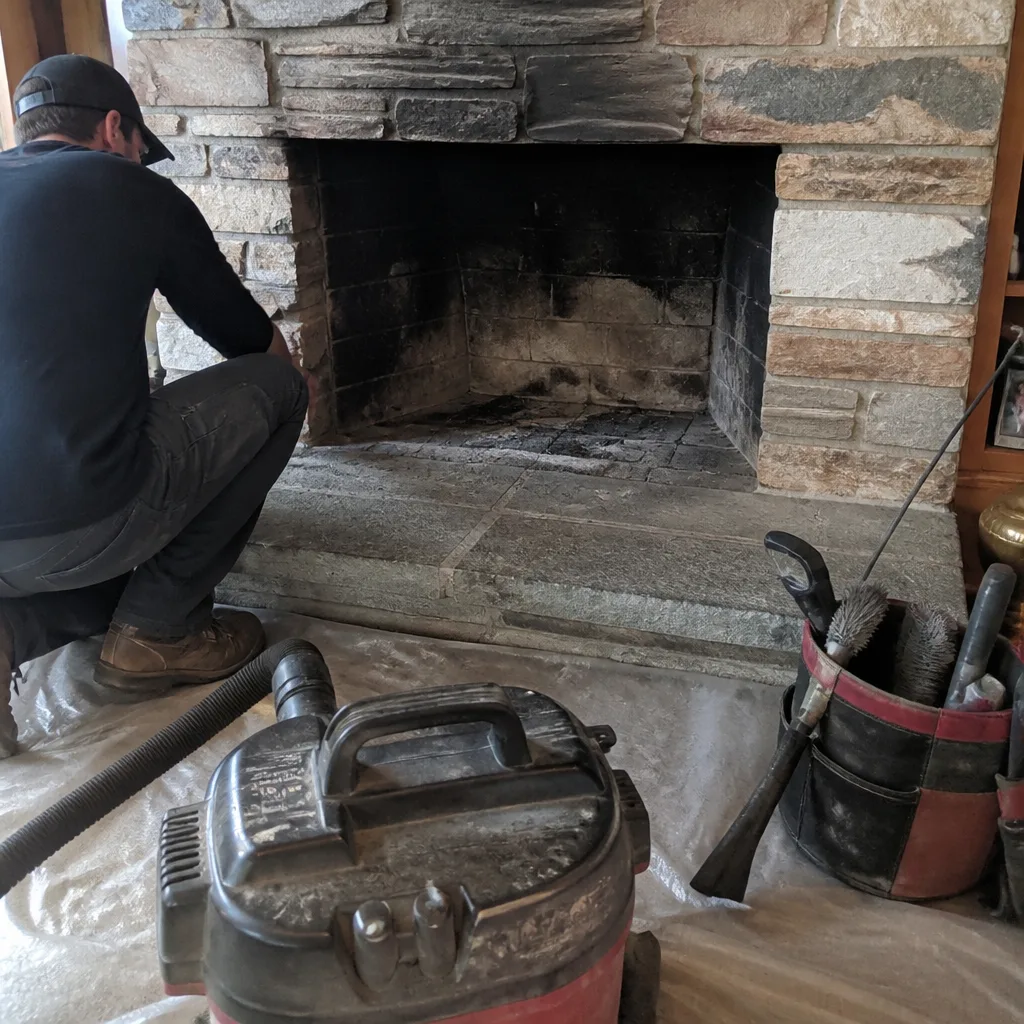
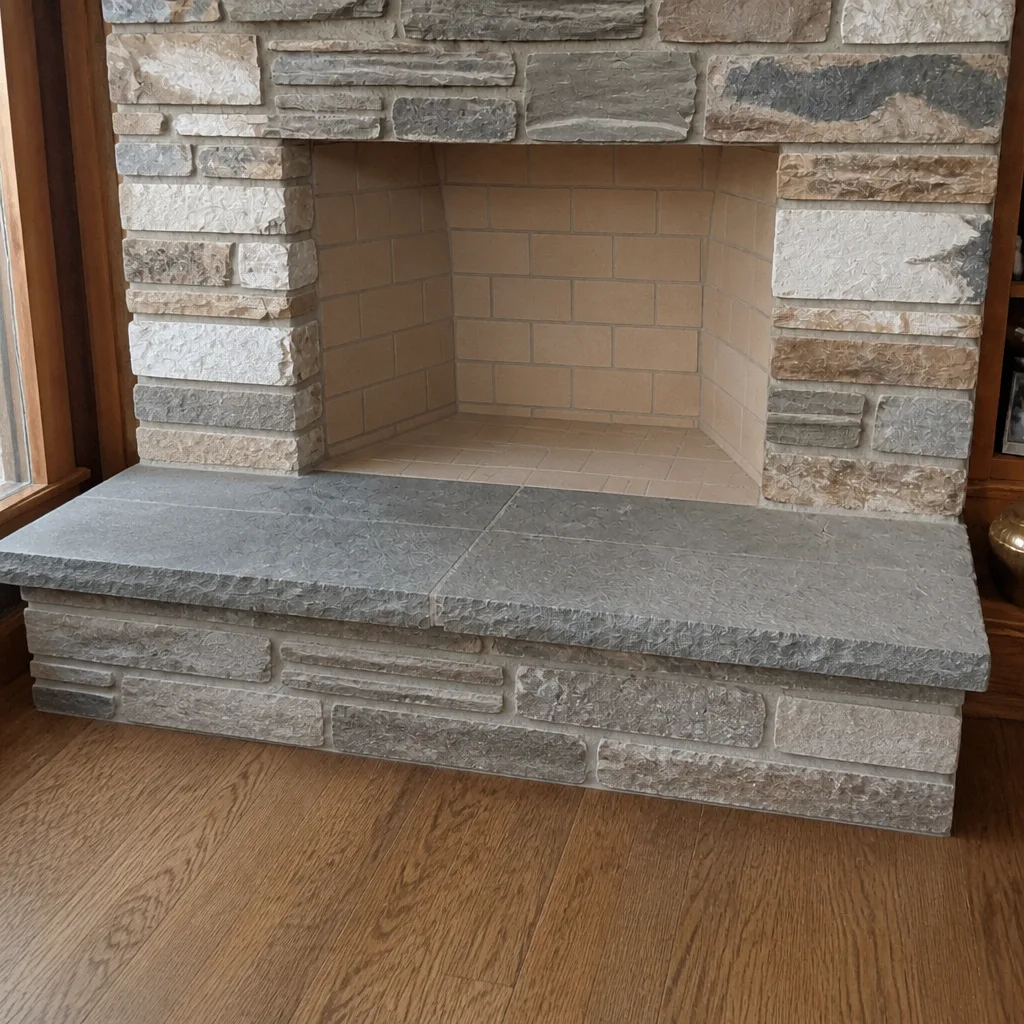
See the difference
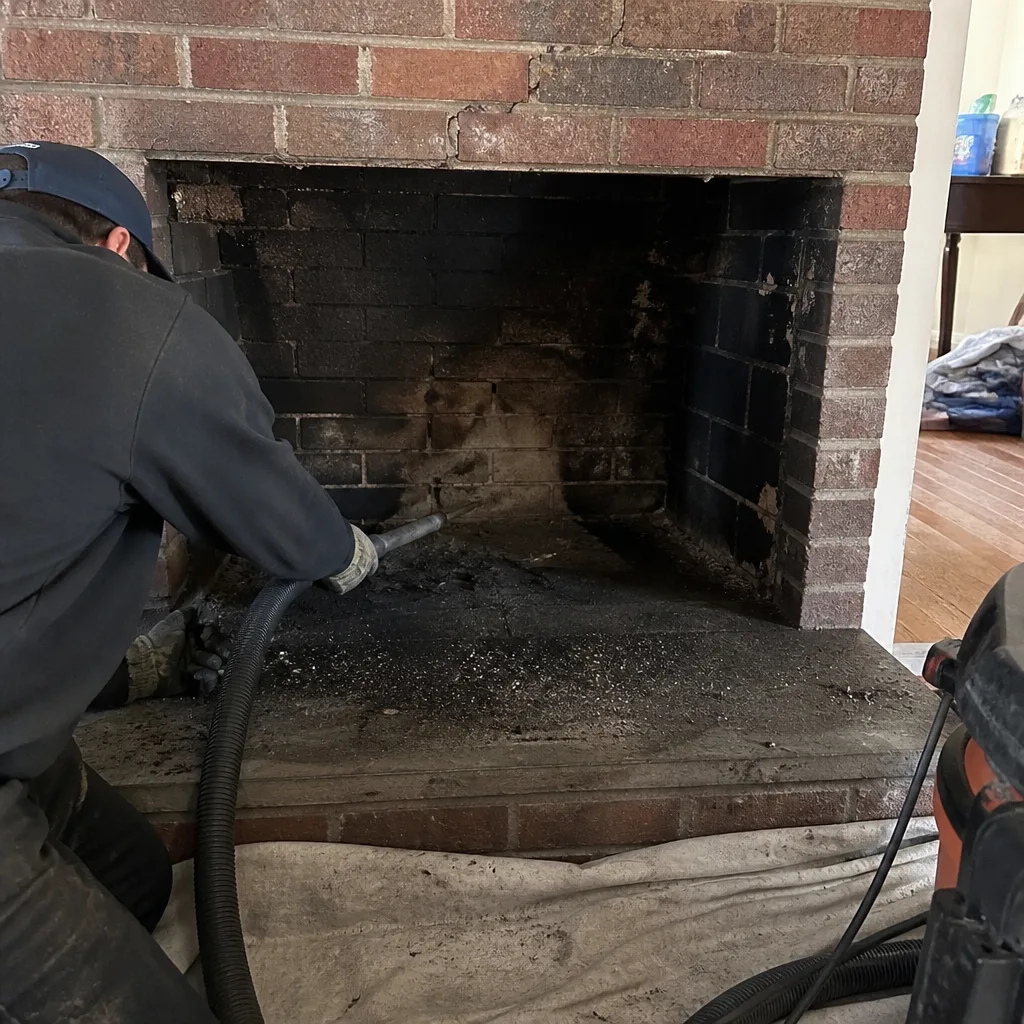 Before
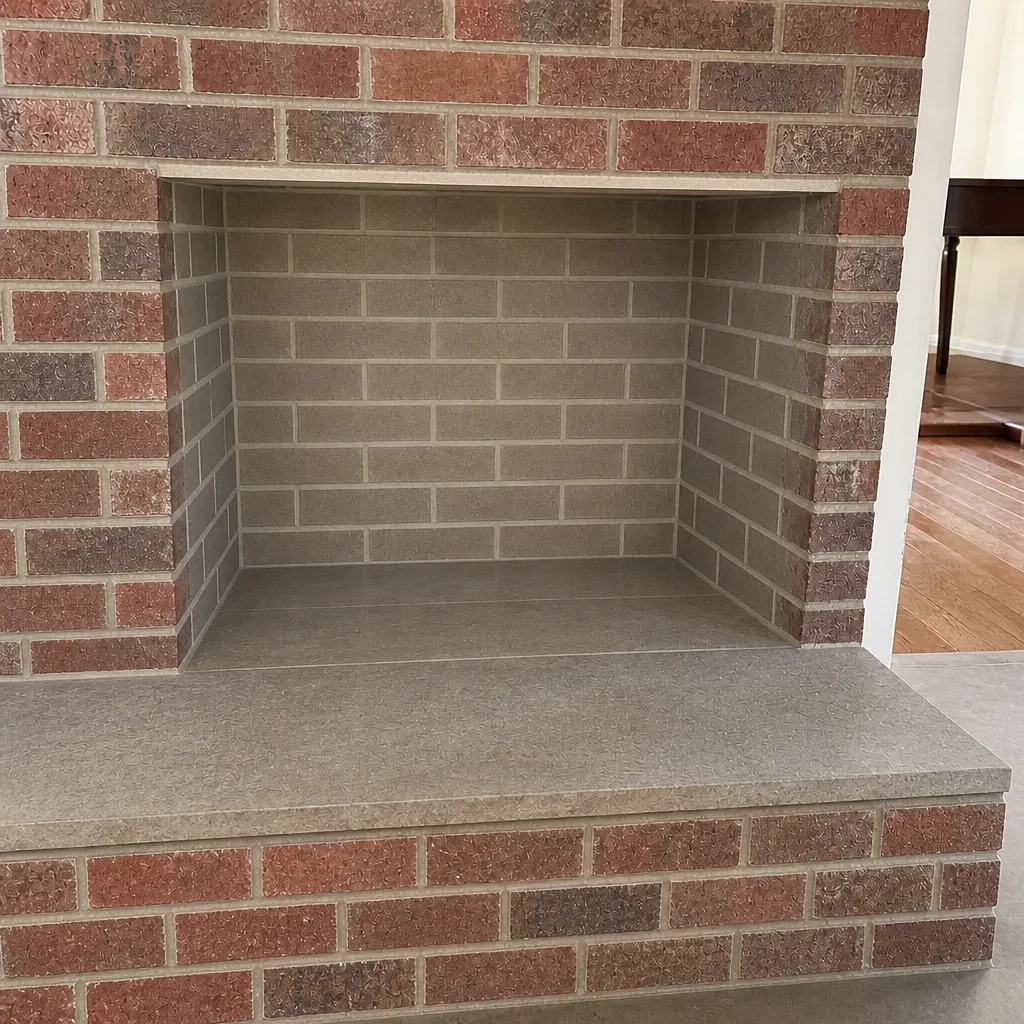 After
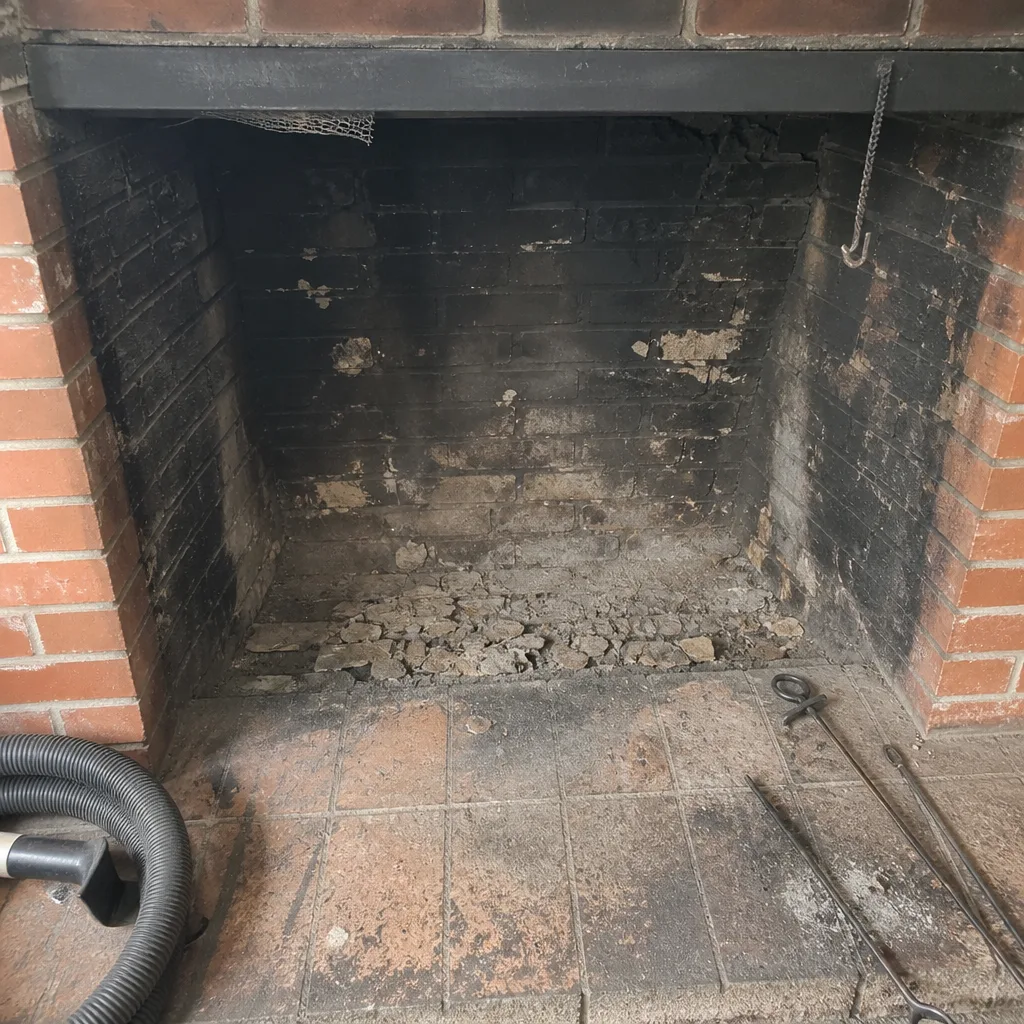 Before
 After
 Before
 After
How Often Should a Lakewood Chimney Be Swept?
Most Lakewood chimneys used regularly for wood burning should be swept about once a year, ideally before the heating season starts. That general guidance is the same everywhere, but the Lakewood-specific piece is what schedules pressure around it: our shoulder seasons swing hard between warm afternoons and cold nights, so the burn pattern tends to be uneven, and creosote doesn’t accumulate linearly. A chimney used mostly in cold snaps and left alone in between can accumulate more deposit than one burned steadily, because every cold start produces a slow-warming flue and more condensation.
An annual sweep is a solid baseline, but there’s a more precise way to reason about it. High-fireuse households, or homes where the wood supply is variable in moisture content, should consider a camera inspection at the start of the season and again mid-season if draft changes appear. Households that burn a few dozen fires a year may only need inspection annually. The system will tell you what it needs if you look at it, and the purpose of a sweep is to remove what you can’t see, not to hit a calendar date.
When you book, you’ll get a sweep with a camera inspection and a photo report so you can see the evidence yourself. If the report shows deposits in Stage 1, a sweep covers it. If it shows Stage 2 or Stage 3, we’ll walk you through what’s needed and what can safely wait.
What Seasonal Rhythm Should You Follow Before Burning Season?
The most useful habit for Lakewood homeowners is a short seasonal rhythm, done before the first burn of the year. It takes a few minutes and catches the subtle warning signs before they become the obvious ones.
- Early fall: Look inside the firebox with a flashlight. Check for white staining, dark streaks, cracked firebrick, and rust on the damper.
- Early fall: Do an exterior walk-around. Check mortar joints, the crown, the flashing, and the cap.
- Before the first fire: Open a window slightly on the first burn of the season and watch the smoke. If it puffs back or the fire struggles to catch, note it and book a camera inspection.
- Mid-season: If draft changes, re-check the damper and the cap for visible obstruction. If the change persists, book an inspection rather than fighting it through the winter.
- Spring: After the last fire, do the exterior check again. Freeze-thaw damage shows most clearly once winter has done its work.
That rhythm is the whole point of an inspection-first approach. It catches moisture and draft signals early enough that the fix is often cleaning or a small repair, not structural work. If you’d rather have a trained eye do the check, that’s what we’re here for.
Common Mistakes to Avoid
- Assuming a clean firebox means a clean flue. The firebox is where the fire burns, not where creosote accumulates. The upper flue is the part that matters, and the only way to see it is with a camera.
- Treating a persistent odor as an air freshener problem. A creosote, animal, or moisture odor is a signal, not a nuisance. Covering it up delays the inspection that would resolve it.
- Waiting for “something obviously wrong” before booking. The strongest warning signs are the subtle ones: a slow draft, a hazy bloom on the firebox wall, a small crown crack. By the time something is obviously wrong, the repair is usually larger.
- Looking only at the chimney from the ground and calling it a check. The crown, flashing, and mortar joints are only visible from a proper angle, and firebox brick needs a flashlight at close range.
- Assuming moderate use means low buildup. A season of intermittent cold-snap burning can deposit more creosote than steady use. Frequency of use is not the same as deposit volume.
- Burning unseasoned wood because it’s what’s on hand. Wet wood produces more creosote, more smoke, and more deposits. The smell and the draft behavior will both be worse.
- Ignoring a carbon monoxide alarm near the fireplace. Treat any alarm near a burning fireplace as a stop signal, put the fire out, ventilate, and have the chimney inspected before the next burn.
When to Call a Professional
Call a professional if you find two or more of the warning signs above in the same season, if a fresh carbon monoxide alarm has gone off near a burning fireplace, if the draft has changed in a way that persists across several burns, or if you haven’t had the upper flue inspected in over a year. Also call if you see cracked or loose firebrick, a damaged crown, or separated flashing; these are structural and shouldn’t be self-diagnosed. Cleaning a chimney isn’t the issue. The issue is that recognizing what’s in the flue, and knowing whether it needs sweeping, resurfacing, or relining, takes a camera and a trained eye. Lakewood Chimney Sweep Experts offers free estimates in Lakewood. Call (855) 964-4542.
Frequently Asked Questions
The most common warning signs are creosote odor that strengthens on warm days, sluggish ignition or smoke that puffs back briefly before drawing, white efflorescence staining on the firebox wall, and exterior mortar joint or crown damage from freeze-thaw cycling. Two or more of these together is a strong signal to book an inspection. Call (855) 964-4542 for an exact quote, and the estimate is free.
Once a year for regular wood burning is a safe baseline, ideally before the heating season. But Lakewood’s shoulder seasons create uneven burn patterns, so a chimney that’s used in cold snaps and left alone in between can accumulate more than a steadily used one. A camera inspection tells you what your particular flue needs, and a sweep with a photo report shows you the evidence. Call (855) 964-4542 to book an inspection.
If the liner is deteriorating but still structurally sound, resurfacing is often the answer, and HeatShield is the system we use for that work. When the liner is beyond resurfacing, a full reline with DuraFlex or Olympia Chimney materials is the right call. The way to know which applies is a camera inspection with photos you can look at yourself, not a guess. Call (855) 964-4542 for an exact quote.
Because the firebox and the upper flue are different environments. Creosote deposits form highest in the flue, where smoke slows and cools. A firebox can look perfectly clean while a Stage 2 or Stage 3 deposit sits above it. The only way to know is a camera inspection, and we show you the pictures. Call (855) 964-4542 to schedule one.
Creosote continues to build, and it can progress from Stage 1 to Stage 3, which is glazed, hardened, and highly combustible. Beyond fire risk, long-term skipping lets moisture damage and small crown or mortar cracks develop into structural repairs. In many cases a sweep caught early is all that’s needed, which is why we recommend seeing the evidence before deciding on work. Call (855) 964-4542 for a free estimate.
Creosote has a cold, sooty odor that strengthens on mild or humid days. An animal intrusion has a sharper, sour, ammonia-adjacent smell, sometimes with scratching at the damper. A damp or musty smell is a moisture signal instead. None of these can be confirmed from smell alone. An inspection with a camera settles it. Call (855) 964-4542 for an exact quote, and the estimate is free.
The Bottom Line
The loudest chimney symptoms are rarely the first ones. The signals that matter most are quiet: a hazy bloom on the firebox wall, a draft that takes longer to catch, a persistent odor that strengthens on warm days, a hairline crown crack. Lakewood’s freeze-thaw cycling pushes exterior masonry through a harder season than most places, so the exterior walk-around matters as much as the firebox check. And a clean firebox proves nothing about the upper flue, which is exactly where Stage 2 and Stage 3 creosote likes to sit. If you take one thing from this guide, let it be the flashlight and the seasonal rhythm: see the evidence once a year, and the decisions get simple. We inspect before we recommend, so if something looks off, we’ll show you what’s happening and what it needs.
Whether you’ve found one warning sign or you’d just like a proper look before the next burn, our team can handle the whole system. Inspect before we recommend. We answer 24/7. Fast dispatch from 7am to 7pm, Sunday through Friday. Call (855) 964-4542.
Written by the team at Lakewood Chimney Sweep Experts.